14 February 2014
A silver tongue is something of a mandatory requirement for a sales person. A major chunk of the deal closing magic is attributed to the spoken word. Be it cold calls, elevator pitches, informal conversations or an official meet and greet, “always be closing” is closely tied to “always be talking”.
Not all conversations are equal. Informal, spur of the moment conversations help build a rapport with prospects. Some among us are masters when it comes to convincing customers over coffee. Some of us do a great a job giving a hands on demo walking straight into the prospect’s place of business.
There is another type conversation that’s almost inevitable as well - sales presentations. Presentations have a formal tone and are more structured. There is little room for spontaneity and creativity.
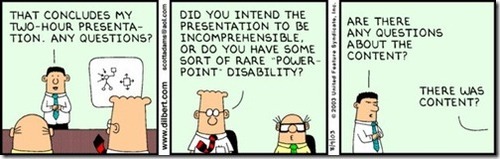
Following a deck of slides to present your thoughts isn’t very interesting in the first place for most of us, isn’t it? The same is true at the other end of the table as well! The moment a prospect sees a PowerPoint presentation, you can be sure that his attention span gets cut in half.
Presentation decks are associated with boredom all through our corporate lives and it’s no wonder even your awe inspiring deck ends up yawn inducing. So, how to get your message across the table when pitching to a customer without making him doze off?
Alright, I admit that I’m stating the obvious here. Of course, there is some homework that goes behind every stage in the sales pipeline. It could be building customer profiles, making cold calls or preparing a business proposal - every single task needs some research and homework.
However, when it comes to a sales presentation, the time spent on groundwork has to be doubled at least. Let me explain why. Let us assume that you represent a marketing agency and you’re pitching to a bunch of top tier prospects. After a stellar presentation, you forget a thing or two about your offerings and tell the prospect that you don’t run pay per click campaigns any more.
In case if you missed something like this in a business proposal or during an informal sales pitch there is always a chance to go back to the prospect with the updated proposal or call him and tell him that you indeed help business run PPC campaigns.
However, when you miss a piece of information like this during a sales presentation, the odds of getting the message right with everyone in that conference room at a later point in time isn’t in your favor. There will always be someone asking, “Didn’t that guy say they don’t do PPC?”. This reduces your chances of moving forward with the deal when there are multiple stakeholders.
And then there is the conundrum of picking a PPT template. Pick a presentation template that’s simple and professional. A template that’s a riot of colors is not going to make the presentation appealing or unique. It might end distracting people.
Remember that a sales presentation is not a replacement to a warm conversation you are good at. Shake some hands, and deliver all your favorite sound bites before turning the projector on. This way, you can be sure that your audience don’t find you as a stranger in a suit.
The time and attention span available for a sales presentation is a very finite resource. To make the most out of it, set an agenda for the presentation and give your presentation certain achievable goals.
The agenda and goals benefit both you and your audience. With an agenda ready, you won’t face the risk of time over runs. Figuring out if you are going to be informative or exploratory will help you draw the line when it comes to planning what you are going to convey through the deck.
It helps to close sales presentations ahead of the allotted time. So, when you have a 30 minute slot for making your case, an agenda should help you keep it down to twenty minutes and not the typical forty or sixty minute marathons. Open the session to feedback and questions to drive home your agenda further with your audience.
Once you are clear of the agenda of the presentation, setting goals is easy. It’s as easy as finding answers to these two questions:
What do I intend to achieve from this presentation?
What exactly is the prospect looking to hear from me?
A follow up meeting, appointment with the VP or even signing of the deal - the goals of a sales presentation could be anything. Incidentally, having such goals help you stay focused and stay on point.
Work on the pitch deck a lot to keep it simple and crisp. Get to the point as quickly as possible. The small talk that I mentioned earlier should help you introduce you and your company. However, if necessary use a brief introduction slide to give a rundown of your business.
Every sales presentation is unique. But, the underlying structure is basically same in most cases:
Introduction - Talk a bit about you, your company and your offerings. There is no room for unnecessary information like how many people you have in the payroll and what kind quality checks you have in place.
Agenda - Quickly brief the audience what the subject of the presentation is and what areas you plan cover during this time. Showing your agenda for the presentation to the audience will reassure them that you are not going to take too much of their time and makes them warm up to your presentation.
Problem Statement and Solution - State the issues that are dogging the prospect’s business and how it might hurt their bottom line if it isn’t addressed on time. Explain what solution you have up your sleeves and how effective they are. Couple of testimonials or success stories will reinforce your claim.
Recap - Briefly restate the highlights of the presentation and drop hints about the goals you have in mind.
Close - Draw the session to a close, take questions and start convincing people to take the next step forward.
Well, nobody is going to say that your presentation was awful even if it actually was the case. Do not mistake the politeness of your audience as a successful acknowledgement of your pitch. Observe them carefully during and after the presentation to see what they aren’t saying out aloud.
The most obvious signs to watch out for are fidgeting and frequent glances at watches. When that happens, your presentation is getting tedious and people cannot wait to get out of the room. Whatever you say beyond this point is not going to make an impact.
You can do one of two things here. Skip a few slides and cut short the presentation. Try keeping a meaningful flow when you are skipping major sections. Or, you could get creative and use your storytelling skills to get their attention back.
If you choose the latter tactic, crack a couple of jokes. Stop the session mid way to tell a customer success story. Except for a song and dance routine, do all you have to do to make people pay attention. You’ll have to make this call on the fly without making it obvious.
Opening the forum for questions is an age old habit after presentations. Instead of brushing it aside as a ritual, you can use this as an opportunity to win over the audience by being candid and forthcoming.
If people aren’t asking questions on their own, you could try telling them about the common questions people ask after your presentation. Answer these questions with witty, informative and crisp answers. Consider this as an infomercial to your product!
Answer all the questions with a reference to the solution that you offer or try your best to steer the conversation that way. The Q & A session is meant to reinforce your solutions to an audience who might or might not have paid attention to your pitch. Use this session to fill the gap in the minds of the audience who weren’t 100% attentive.
Even when you are not requested, volunteer to give a demo of your offering to the audience. This is one of the perks of closing a presentation ahead of schedule. You won’t make people feel like you are taking too much of their time.
Just like trying to steer the conversation always to the problem they face and solution in the offing, push for a demo without appearing desperate. You might not get another chance to get all the stakeholders on board for a fact finding session with a hands on experience.
It isn’t very hard to come up with a perfect agenda and the right set of goals. Cutting short a presentation by ten minutes might look good on paper. In reality though, it hardly ever materializes. There is a time tested remedy for time over runs and it’s called practice.
Rehearsing your presentation is not just about saving some time for a demo. Practice sessions help iron out kinks your flow and the pitch in general. By practicing the presentation before the real engagement, you can build much needed confidence.
This is the era of elevator pitches and people expect all sales engagements to happen at the same level urgency as well. So, a well rehearsed sales presentation that’s brief, engaging and short is bound to set you poles apart from your competition!