24 December 2013
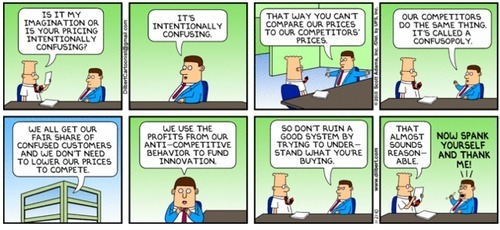
Raise your hands if you have encountered customers who have stated that the price of your offering the reason behind their inability to close the deal. Welcome to the club! A deal isn’t is closed until it is closed. And, pricing could throw a monkeywrench in your otherwise flawless sales management pipeline.
It’s often common for customers to get cold feet during the sales cycle. There could be many factors behind it, but, money is more often the deal breaker with a monstrous might. It’s the one factor that casts a long shadow on the successful closure of a deal irrespective of how many steps you’ve successfully completed.
It’s when you decouple price sensitivity from your product or service is when you become a revenue rocket. However, that’s something that takes careful analysis and an extreme makeover of how your entire sales team collaborates. Measuring how sensitive your audience is about price is the first logical step.
When it comes to understanding the effect of price on sales and revenue, there a few economic theories that you can read about to get a grip of the subject. Price elasticity makes for an interesting read. It helps a business owner figure that million dollar question - “How much more will I sell, if I lowered my price?”.
Price elasticity is a broad concept and you might have to navigate through a ton of marketing jargon. As a matter of fact, it’s one of the favorite subjects for B-School students to take a little nap!
If you are looking for a more direct and simplistic way to get the pulse of the audience when it comes to price sensitivity, Van Westendorp is your friend!
Proposed by Van Westendorp in 1976, the Price Sensitivity Meter (PSM) is a technique to measure consumer price preferences. A favorite go to technique for market researchers worldwide, PSM is attractive and appealing because of its simplistic approach.
Simply put, PSM is all about about asking questions to your audience and seeking their feedback. Well if you don’t like math, there is this annoying work of collating and creating a report after the feedback session. However, in essence it’s a method that’s practical, inexpensive and has the potential to offer great insights.
Asking the right questions is always the key. To make our lives easier, Van Westendorp has done a lot of heavy lifting and figured out the right questions to pose to your audience. The standard question formats can vary, but generally take the following form:
At what price would you consider the product to be so expensive that you would not consider buying it? (Too expensive)
At what price would you consider the product to be priced so low that you would feel the quality couldn’t be very good? (Too cheap)
At what price would you consider the product starting to get expensive, so that it is not out of the question, but you would have to give some thought to buying it? (Expensive/High Side)
At what price would you consider the product to be a bargain—a great buy for the money? (Cheap/Good Value)
After plotting the cumulative percentages, it’s time for making inferences from the different interactions and their relationships between various plots. There are various of school thoughts that argue how to interpret these intersections and the type of businesses that won’t fall under the purview of PSM.
For instance, if you are into selling luxury and lifestyle goods, PSM will be of no help as consumers in this vertical aren’t always the biggest fans of cheaper prices.
In reality though, comparing the various suggestions about interpreting the plots with your experience and understanding of the market is bound to help you zero in on the right price range.
It’s golden if you could start talking about the value your offering delivers before the customer could bring up “how much is it gonna cost me?”. Making the customer see how you can help them improve the bottomline and streamline their bottlenecks will do wonders to close a deal.
Let’s assume that you are a boutique web design agency meeting a prospective client who is looking to get the website a facelift. Answering him straight away that you’ll charge him $3000 for the project and $500 a year for maintenance, will ensure that you’re out of the race.
There are hardly any barriers of entry for getting a website up and running. Websites can be created for about $50 with the help of a WordPress template, if the person is tech savvy. And, there are always people who undercut their competition by predatory pricing. A $300 flat fee for a website revamp will always ring better in the client’s ears.
You know what sounds better? The fact that you have built over 50 web properties for small and medium business. That you specialize in UX and are a SEO ninja. Telling the client how your years of experience can actually convert the customer by pushing them towards the call to action (CTA).
Nothing beats your guarantee to turn the client’s bland website into a buzzing lead generation powerhouse. And, its these superpowers that the client is paying for, and not a static website that has a few pages of HTML and CSS code.
Betting your barn on an exhaustive feature set that’s a mile long is not a smart idea. Your product might have over 300 features, but, the competition might have 350 of them already and if they don’t, they will have them all a quarter from now.
Matching the competition feature for feature is something that every business is good at these days and it’ll take you down a path that’s just unprofitable. People love to work with simple tools that get the job done. How best your product can solve their problem is the only metric that counts.
An overworked team of game developers might not be impressed with a salesperson selling a testing suite that’s the digital equivalent of a swiss army knife. Instead, explaining to them they can cut down 200 hours of testing and debugging time amongst them every month will do the trick.
It’s hard not to escape the comparison checklist of customers. Work out an elaborate cost benefits analysis chart. Help the client understand that the money he is spending is actually an investment in the future. A better RoI is a very tasty carrot and there is no shame in dangling in front of them as much as you can.
When they argue that you lack feature X and Y your competition has got, show them how feature Z of yours makes their life easier. A 20% jump in productivity using your product always makes the prospect forget the competing alternative that has 50% more features than you!
Not every lead is worth your while. And, it doesn’t mean much if you pitch to three times the number of people than your peers. Conversion matters and nothing else. A chance at closing a deal arises when you can zero in on the potential lead who is genuinely interested in your offering.
A quick research on the prospect you plan to sell your offering can save you a ton of trouble and an arduous sales cycle. Make sure they are in need of your offering and if they have the revenues that’ll justify buying from you.
Understand the nature of their business and the pain points that they might be facing. Learn how their competition is tackling these problems effectively. Make a pitch that’s is laced with past performances, present day solutions and the future profits.
Also, always ask what their budget is before moving too far in the sales process. Probe them if they’ll be okay with paying extra for added value. The flexibility of the prospective customer in terms of price when they come to know about the enhanced value is the metric to gauge before moving forward.
Imagine you are selling a car that’s 10% costlier than the budget that the prospect has in mind. If you could convince that the pricing is justified because of the safety that the extra passenger side air bags bring in, then it’s all good. But, if the customer still insists that you match the price of a standard car that’s in his budget, you are not going to close the deal.
It’s alright if you have to say no to cutting down prices just for the sake of winning a deal. A customer who doesn’t see the value in a product isn’t going to be your best brand ambassador anyway.
Brands justify prices. When you are an established brand that has a recall value, you don’t have to work hard to convince people about the value and benefits that you bring to the table.
Do you care for your customers? Are your products durable? Does your service come with a timely response? A brand answers each and every single one of the questions of customers who are in the market for something that you offer. Standing out from the competition is made easy when you are a brand that has got the mindshare.
Talking about mindshare, it’s directly proportional the market share. Nobody walks into an Apple Store and asks if the iPhone is durable enough. Nor is anyone gonna enquire if Red Bull is good enough an energy drink. These brands have established those facts fair and square and that’s the reason they sell truckloads of products.
Imagine the results when your company becomes one such a brand sometime in the future. It doesn’t happen overnight, but, it definitely is doable. It takes quality and consistency to become a brand that people open their wallets for.
Massive marketing buys don’t make lasting impressions any longer. Brand building in the era of Internet and social media has become a whole lot cheaper. Creativity and passion are the currencies that move mountains today.
You can get people to talk about by writing an awesome blog. Delighting people with exceptionally awesome customer service is always a winner. Lending an ear to feedback and making your offering competent is any day better than plastering ads all over the place. Consistency in everything that you do is the key build brands that overcome price sensitivity.
Got any tricks up your sleeves to help convincing customers who complain about pricing of a product or service?