21 November 2013
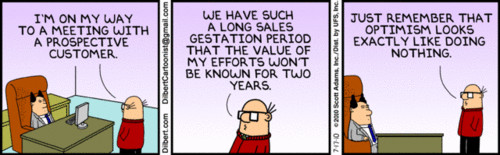
A short sales cycle is every sales person’s dream. Closing a deal in days or weeks and not in months means a very healthy sales pipeline, boatload of bonuses and enough free time to watch your colleagues scramble to meet their quota. It’s the sales field equivalent of a Unicorn or a double rainbow!
A short sales cycle is one where you end up closing the deal sooner than the average closing time after the first contact. The benefits of a short sales cycle are manifold. Besides bringing in more revenue and market share, short sales cycle keep the morale high across the board. So, what is stopping you from attaining the short sales cycle nirvana?
Depending on who ask, there are either seven or eight steps in the sales process. No matter how big or small the size of the deal is, you can condense all your efforts into these few steps. Naturally, slipping up on any of the steps will end up prolonging the sales cycle.
Besides that, there are many other reasons for a long sales cycle. Some verticals have inherently long sales cycles. But, most of the times it’s improper planning and poor communication that come in the way of closing a deal. To be precise, there are four important factors that contribute to the delay in making a sale:
Thankfully, getting out of the rut of a long cycle is quick and easy. All it takes is a bit of homework and a methodical approach. By moving from what you think about a deal to what you actually know about the deal you could shave quite a bit of time from your sales cycle. Here’s how to do it systematically:
1. A Clear Value Proposition
Value proposition is the promise of value to be delivered to the customer. It’s as simple as explaining in simple words how your offering can solve the customer’s problem. By telling customers all the benefits they stand to gain by choosing your offering, you take ambiguity out of the sales equation.
When a prospect has a clear understanding of the value you are offering, it puts competition research on the fast track for them. Whether they do it themselves or you push them yourselves towards that door, the reasons to choose you and not your competition gets easier from here. A few quick tips for a better value proposition are:
Problem Definition - It’s good to show the customer that you have a clear grasp of the problems they face. Define it in detail to reinforce your deep understanding of the issues and how your offering delivers a solution. Sprinkle this with the relevancy and urgency of resolving the problem and you are on the right track.
Clarity - Use simple language and make it easy for people to read and understand. Avoid jargon at any cost and break it down to crisp, simple sentences. If they can’t read and understand it in a few minutes, you are not conveying it with clarity.
Highlight the Benefits - Let’s assume that your offering is $10 lesser than the competition. That’s a good start, but, in many cases you might want to bring all that you can do to sweeten the deal. Do you offer free maintenance for three years? Is your phone support 24x7? How about free shipping? Ensure that the you have more checks in the benefits column than your competition.
2. Know Who to Talk to
Alright, this step has two distinct parts. The first and foremost one is to find the right set of customers to talk to. When I say customers, I mean businesses and brands that make the list of your potential customers. Do extensive customer profiling to zero in on the prospects that’ll end up converting rather than wasting your time pitching to everyone you come across. In a nutshell, do the following:
Define Your Customers - Define who your ideal customer is using solid research and data. By using customer demographics, psychographics and their lifestyle you should be able to paint the broad strokes of your ideal customer profile.
Fix the Bottlenecks - Know how the purchasing process works and benchmark it against your business processes. Fix all the the bottlenecks that come in the way of your prospect hindering them from making an informed decision and eventually in closing the deal.
Target the Right Channels - Use your marketing resources to identify and target the places where your customer frequent. A full page advertisement in Wall Street Journal is definitely cool, but before you spend your money on that ad, find out if your audience actually read business newspapers in the first place.
Once you have a customer persona drawn up, find the right person in the company to talk to. Plenty of time is wasted talking to people who aren’t actual decision makers. Figuring out the organizational structure of a company before walking in is an absolute must. This used to be a huge pain, but with the advent of LinkedIn it’s now easy to quickly drill down a company’s hierarchy.
Invest in a LinkedIn premium account if you deal with B2B deals. Also, try using tools like Rapportive, Unifyo etc. to save a ton of time.
3. Plan Your Conversation
Create a sales process roadmap with a timeline for each and every step. This way you will know exactly which steps drain your energy and efforts. Map out the topics of conversation before every scheduled meeting to keep the interaction from veering off topic.
In fact, sharing the purchase roadmap with the prospect could help them understand that this is a time bound process with finite goals.
Such a plan will come to your rescue when the prospect raises doubts about your offering. You get to prepare answers in advance and be ready when the questions start pouring in. It’s better to answer all questions and clear the doubts well in advance. Dragging this clarifying part is not going to help you in winning the confidence of your prospect.
By planning your actions, you can save time by addressing all the concerns and even voluntarily answer any queries that you anticipate in advance. Going this extra mile is bound to get you in the good books of the prospect and a better response to your sales outreach efforts.
4. Be Patient and Persistent
There couldn’t be a tired old cliche than advising salespeople to be patient. It’s an occupational hazard (!) that has the power to yield rich dividends. So, I guess you are wondering how staying patient is going to help speed up a sales process, right? When I say stay patient, I mean not to rush things any more than usual.
Follow all the steps of the sales process diligently and there should absolutely be no skipping ahead. When the sales process starts to drag, it possible to get demotivated and start thinking about moving on to the next deal. A delay in the prospect’s part and a delay in getting in touch with them regularly is only going to add to the agony.
Long sales cycles warrant more sales calls than usual, and it’s critical you don’t lose steam midway. Keeping in regular touch with a prospect is an opportunity to build a rapport over time. A consistent follow up schedule will get you results quicker than you expect. It’s a job made easy if you’re using a CRM!
5. Build Trust
Half the time prospects are unsure if you or your company is resourceful enough. They have to be convinced that you won’t disappear after getting the check. Your participation in post sales relationship matters a lot to a customer. Winning their trust is vital in making the deal happen and thankfully there are many creative ways to do that.
Prospects don’t want to hear about how awesome you are. Instead, they expect you to demonstrate that you are indeed awesome. Now is the time to put your storytelling skills to use. Explain in detail how you solved real world problems with your offering. Show them case studies, testimonials and customer success stories. Better yet, get them to talk to your customers.
For the long run though, consider leveraging the power of the Internet and social media to your advantage. Give your website a facelift, start a blog and most importantly start writing articles regularly, be active on relevant social channels - in short, simply be visible and have a voice of your own. Establishing yourself as a thought leader is a cool way to get past the trust barrier!
So, that’s all that I have got to tell you folks about shortening your sales cycle. Got a few interesting tidbits for your peers? Do sound off in the comments section!